Uncategorized

Why Every Business Website Needs a Security Review Before Redesign or Migration

Why Every Business Website Needs a Security Review Before Redesign or Migration A website redesign or migration is often seen as a visual or technical upgrade. The company wants a modern look. The pages need better structure. The website must load faster. The content needs updating. The business may move to a new hosting provider, switch platforms, rebuild in WordPress, migrate to a custom solution, or connect new tools such as CRM, booking, analytics, forms,

Why Every Business Website Needs a Security Review Before Redesign or Migration Read More »

AI in Business Applications: How to Use Automation Without Creating Security Risk

AI in Business Applications: How to Use Automation Without Creating Security Risk Artificial intelligence is quickly becoming part of everyday business software. Companies use AI to automate support, generate content, analyze documents, summarize emails, classify data, support sales teams, improve customer service, process forms, and accelerate internal workflows. AI can save time and improve productivity. It can help employees work faster and help businesses deliver better digital experiences. But AI also introduces new security, privacy,

AI in Business Applications: How to Use Automation Without Creating Security Risk Read More »

Website Maintenance Is Cybersecurity: Why Updates, Backups, and Monitoring Matter

Website Maintenance Is Cybersecurity: Why Updates, Backups, and Monitoring Matter A business website is often treated as a finished project. The design is approved. The pages are published. The contact forms work. The company appears online. From that moment, many businesses assume the website is complete. But a website is not a static brochure. It is a living digital system. It runs on software, plugins, themes, hosting infrastructure, databases, forms, user accounts, integrations, analytics tools,

Website Maintenance Is Cybersecurity: Why Updates, Backups, and Monitoring Matter Read More »

Beyond Monitoring: Why Modern Software Systems Need Observability

Beyond Monitoring: Why Modern Software Systems Need Observability A dashboard shows that an application is slow. An alert reports that error rates have increased. A server appears healthy, but customers cannot complete their transactions. Traditional monitoring can tell a technical team that something is wrong. It does not always explain why it is happening. Modern applications are distributed across cloud services, containers, databases, APIs, third-party platforms and multiple geographic locations. A single customer request may

Beyond Monitoring: Why Modern Software Systems Need Observability Read More »

Technical Debt: The Hidden Cost That Slows Down Software Development

Technical Debt: The Hidden Cost That Slows Down Software Development Every software product begins with a set of decisions. Teams choose an architecture, programming languages, frameworks, databases and deployment processes. Some decisions are carefully planned. Others are made quickly to meet a deadline, validate an idea or respond to an urgent business requirement. Over time, these compromises accumulate. The application may continue to work, but every new feature becomes harder to implement. Developers spend more

Technical Debt: The Hidden Cost That Slows Down Software Development Read More »

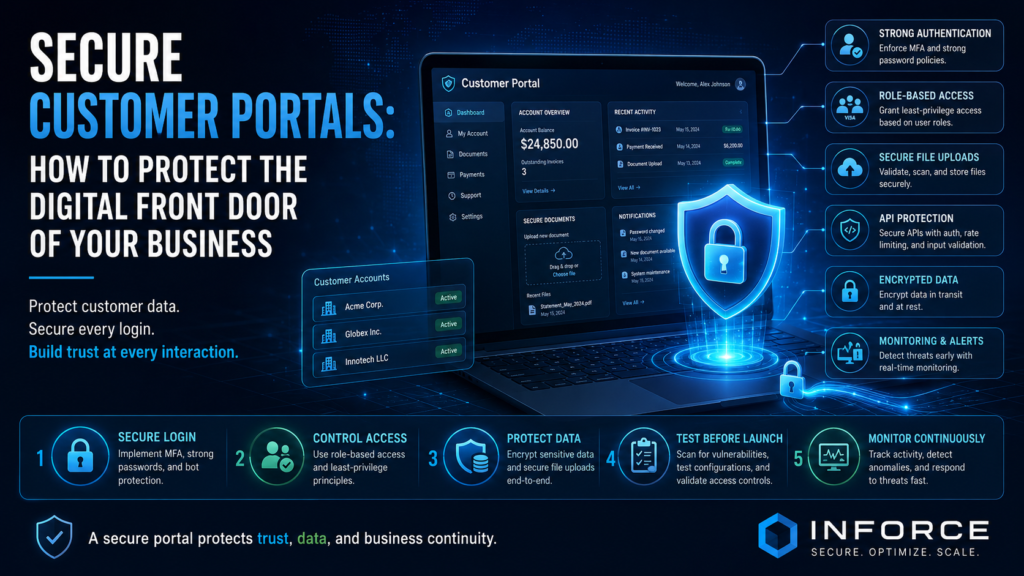
Secure Customer Portals: How to Protect the Digital Front Door of Your Business

Secure Customer Portals: How to Protect the Digital Front Door of Your Business Customer portals have become one of the most important digital touchpoints between businesses and their clients. They allow users to log in, manage accounts, upload documents, view invoices, make payments, track orders, access services, submit requests, communicate with support teams, and manage personal or business information. For customers, a portal creates convenience. For businesses, it improves efficiency, reduces manual work, supports self-service,

Secure Customer Portals: How to Protect the Digital Front Door of Your Business Read More »

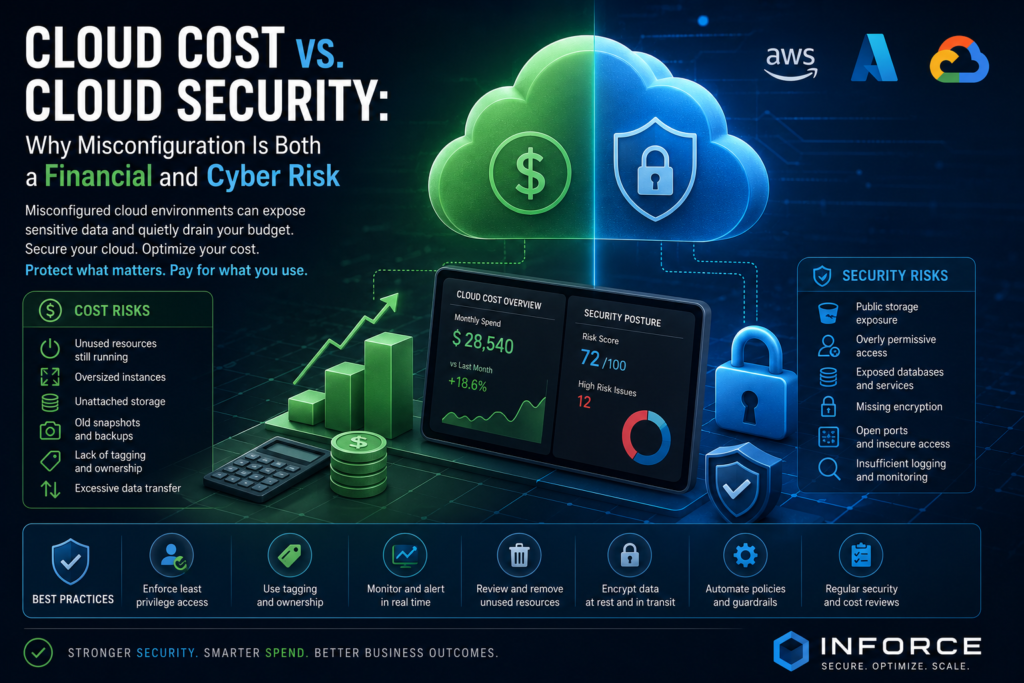
Cloud Cost vs. Cloud Security: Why Misconfiguration Is Both a Financial and Cyber Risk

Cloud Cost vs. Cloud Security: Why Misconfiguration Is Both a Financial and Cyber Risk Cloud platforms help businesses move faster. They make it easier to launch new products, scale infrastructure, support remote teams, store data, deploy applications, and connect services across different environments. For startups, growing companies, and enterprise teams, the cloud offers flexibility that traditional infrastructure often cannot match. But cloud flexibility also creates complexity. New servers, storage buckets, databases, permissions, APIs, users, containers,

Cloud Cost vs. Cloud Security: Why Misconfiguration Is Both a Financial and Cyber Risk Read More »

Penetration Testing vs. Vulnerability Assessment: Does Your Business Really Need?

Penetration Testing vs. Vulnerability Assessment: What Does Your Business Really Need? Every business today depends on digital systems. Websites, mobile applications, internal platforms, cloud services, APIs, customer portals, payment systems, and third-party integrations all help companies operate faster and serve customers better. But every digital system also creates potential security risk. A single weak password, exposed API endpoint, outdated plugin, misconfigured cloud service, or vulnerable application component can become an entry point for attackers. This

Penetration Testing vs. Vulnerability Assessment: Does Your Business Really Need? Read More »

Secure by Design: Why Cybersecurity Should Start Before the First Line of Code

Secure by Design: Why Cybersecurity Should Start Before the First Line of Code   Cybersecurity is often treated as something that happens at the end of a project. A website is built. A mobile application is developed. A custom platform is launched. Then, just before release — or sometimes after an incident — someone asks the important question: “Is it secure?” By that point, the answer may be complicated. Security issues discovered late in the

Secure by Design: Why Cybersecurity Should Start Before the First Line of Code Read More »

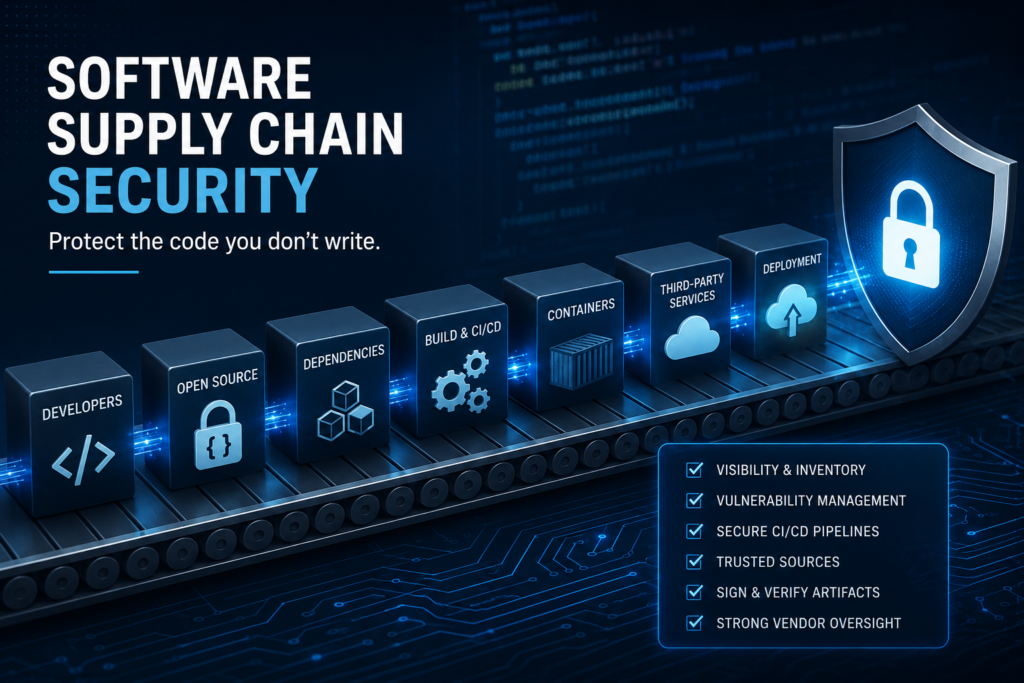
Software Supply Chain Security: How to Protect the Code You Do Not Write

Modern software is rarely built from scratch. A typical application combines open-source libraries, container images, SaaS integrations, CI/CD workflows, package managers, cloud services and internal code written by multiple teams. This makes development faster, but it also creates a new reality: your security no longer depends only on the code you write. It depends on the code you import, the build systems you trust, the vendors you integrate with and the automation that pushes software

Software Supply Chain Security: How to Protect the Code You Do Not Write Read More »